• missionGraphicNewStupa980-2
  • missionGraphicDHint980-2
  • missionGraphicFHandStupa980-2

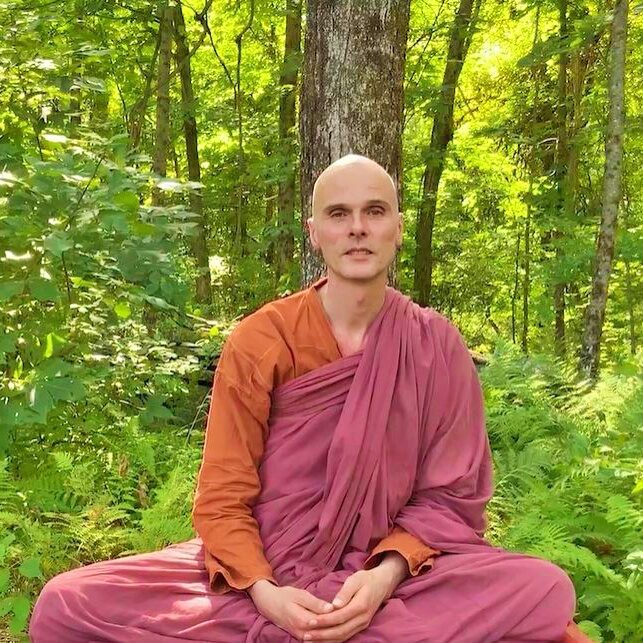
Jason Siff Upcoming Course:
Awareness of Thinking
Jason Siff – June 20-23

Gentle awareness of thinking in meditation can paradoxically lead to less thinking, more calm & clarity. There is an open & receptive way, in which thoughts & emotions are not a problem or a distraction. Jason Siff, a Buddhist monk in Sri Lanka in the 1980’s, has taught since 1990.
Awareness of Thinking

April 25, 2013 full moon

A discussion at the recent conference on secular Buddhism
A discussion at the recent conference on secular Buddhism.

New rivers, new rafts

A conference of scholar-teachers
on the unavoidable reimagination of Buddhadharma

by Chris Talbott

Here some clansmen learn the Dhamma–discourses, stanzas, expositions, verses, exclamations, sayings, birth stories, marvels, and answers to questions–and having learned the Dhamma, they examine the meaning of those teachings with wisdom. Examining the meaning of those teachings with wisdom, they gain a reflective acceptance of them. They do not learn the Dhamma for the sake of criticising others and for winning in debates, and they experience the good for the sake of which they learned the Dhamma. Those teachings, being rightly grasped by them, conduce to their welfare and happiness for a long time. Why is that? Because of the right grasp of those teachings….

Suppose a man in the course of a journey saw a great expanse of water, whose near shore was dangerous and fearful and whose further shore was safe and free from fear, but there was no ferryboat or bridge for going to the far shore. So the man collected grass, twigs, branches, and leaves and bound them together into a raft, and supported by the raft and making an effort with his hands and feet, he got safely across to the far shore. When that man got across and had arrived at the far shore, he might think thus: ‘This raft has been very helpful to me, since supported by it and making an effort with my hands and feet, I got safely across to the far shore. Suppose I were to haul it onto the dry land or set it adrift in the water, and then go wherever I want.’ It is by so doing that that man would be doing what should be done with that raft. So too I have shown you how the Dhamma is similar to a raft, being for the purpose of crossing over, not for the purpose of grasping.

–transl. Bhikkhu Bodhi


A conference on secular Buddhism at BCBS

Last month, some 30 people with long and deep interest in Buddhist thought and practice met at Barre Center for Buddhist Studies. All of them have taught Buddhism in one form or another for  decades–some as academics, some as former monastics, all as scholar-practitioners. Together they represent all three “turnings of the wheel,” from the Theravāda through Mahāyāna and Vajrayana, and thus the three largest groups of practitioners in the West: Theravadan, Zen and Tibetan. They came from as far as Australia and Israel, bringing formal training in linguistics, neuroscience, philosophy, psychology or religious studies. More than half are published authors. Most of them already knew several of their fellow conferees, but knew others only by reputation. Needless to say, there was no shortage of interesting conversation.

No one needed convincing about the importance of the issues under the working title, “secular Buddhism.” As one participant noted, just as we need to keep redefining “democracy” we need to do the same with Buddhism. They pursued that definition through twenty-two formal presentations, about a dozen topical discussion groups, and much informal but fruitful talk over the course of three days. They wrestled with the reality that the Buddhist traditions from which we have drawn our practices, ethics and philosophies are not automatically compatible–as  traditionally understood and practiced–with  science, rationality, and twenty-first century culture.

Gay Watson, Nona Olivia, Willoughby Britton

New rafts: How did the need arise?

When the nineteenth-century German philosopher Nietzsche declared “God is dead,” he was not exulting, but rather warning us that science and pure rationality had removed the focal point, the perspective, that religion had been providing, and that we had not found a suitable replacement.

A similar realization is now front and center for some Western Buddhists. They are attracted by what they see, inherent in the Dharma, as the potential for an atheistic or “post-theistic” solution to the human existential problem. They believe it can provide the focal point for a human life without seeking to remove science from authority over its domain. They want to throw out the metaphysical, dogmatic bathwater without losing the sacred baby. They hope to retain the kind of whole-life role Buddhism has had in its traditional cultures, without insistence on fundamentalist dogma, the limitations of monastic hierarchy, or negative cultural practices such as gender discrimination. In other words, there is a lot of work to do–but they see no alternative.

Before the nineteenth century, Buddhist teachings moved slowly, over generations, travelling to new countries and kingdoms in the minds and the rucksacks of wandering teachers crossing mountains on foot. Today, science, technology, and the increasingly global changes in culture that spring from them, have created radically new environments, new rivers for Buddhist teachings to cross.

Click here to continue reading…

March 27, 2013
Wheels of Fire: The Buddha’s Radical Teaching on Process
By Kate Lila Wheeler

February 25, 2013
True & False: Dharma After the Western Enlightenment
Talking with Rita Gross

January 26, 2013
Honoring a Life & Legacy in the Dhamma
Talking with Mirka Knaster about Munindra

December 28, 2012 full moon
A Classical Future
Interview with Insight Journal editor

November 28, 2012 full moon
Unburdened with Duties & Frugal in Our Ways
by Tony Bernhard

October 29, 2012 full moon
The Busier You Are, the Slower You Should Go
by Martine Batchelor

September 29, 2012 full moon
The Arrows of Thinking: Papañca & the path to end conflict
by Ajaan Thanissaro

August 31, 2012 full moon
A Conversation with Bhikkhu Anālayo

August 1, 2012 full moon
Mindfulness & the Cognitive Process, Part II
by John Peacock

July 3, 2012 full moon
The Language We Use to Talk about Meditative Experiences
by Jason Siff

June 5, 2012 full moon
Mindfulness & the Cognitive Process, Part I: The Pathology of Desire
by John Peacock

May 5, 2012 full moon
Getting Out of the Romantic Gate:
A conversation with Ajaan Thanissaro

April 6, 2012 full moon
Dhammapada 13, translation and commentary
by Andrew Olendzki

March 8, 2012 full moon
Teaching Mindfulness to Children:
Talking with Christopher Willard

February 7, 2012 full moon
Mindfulness in Buddhism & Psychology:
Talking with Christopher Germer

January 9, 2012 full moon
Going Forth: A Buddhist Approach to Retirement & Old Age
Talking with Mu Soeng